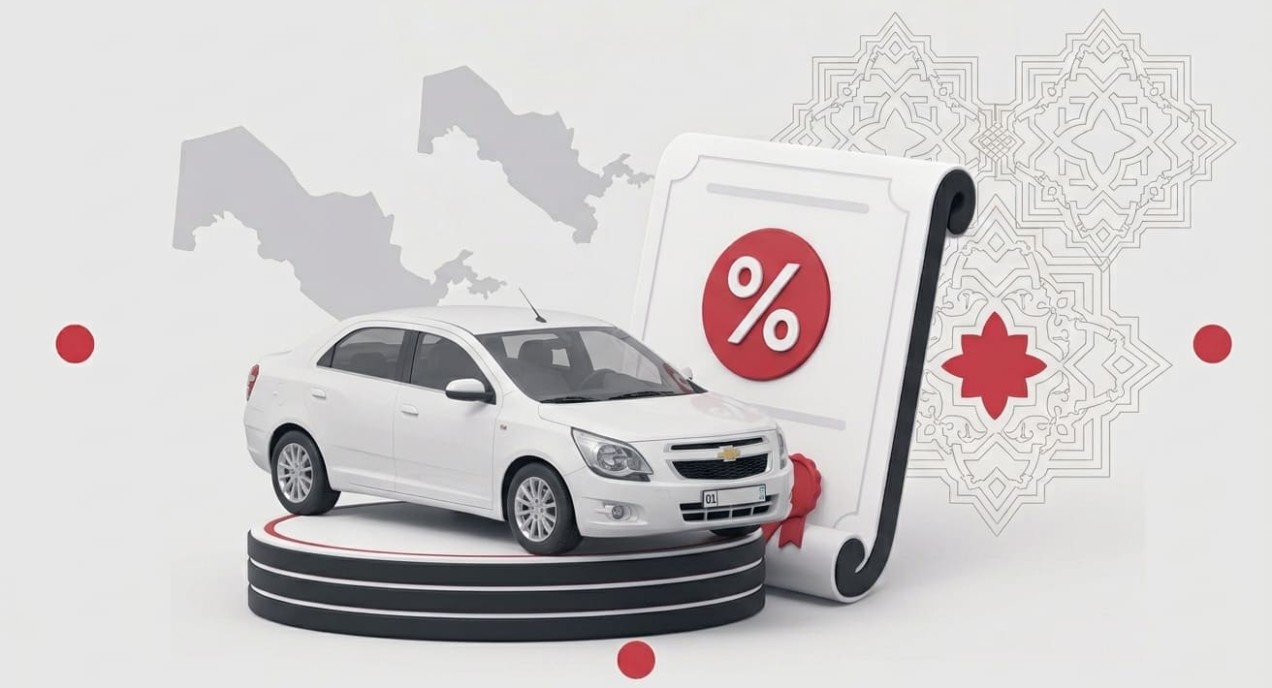
A taxi driver, repair technician, market vendor, courier — millions of Uzbek residents have stable income but no employment record or income certificate from an employer. For a long time, such a customer was inaccessible to banks: no official salary meant no car loan. Today the situation has changed. The government has legalized self-employment, and banks have acknowledged that a significant part of the economy operates outside "white" salaries, launching products for borrowers without income verification. Let's examine how this works and what it costs.
What changed for the self-employed
A registered self-employed person is not legally considered a person without income. Registration takes a few minutes in the tax authority's app, and in return you receive a status that banks accept instead of an employment record. Just a few years ago, it was impossible to issue an income certificate for the self-employed, so creditors devised workarounds: higher down payments, risk insurance, collateral. These mechanisms form the basis of most programs today.
Key principle: the bank doesn't refuse verification but shifts the risk to the borrower through money, collateral, or interest rate.
How banks compensate for the lack of income certificate
- Down payment from 30–50%. The most common condition. The more you contribute, the fewer questions about your income. Some banks don't require a certificate at all if the down payment exceeds 30%.
- Card turnover. Regular deposits over 3–6 months are analyzed by the bank itself through electronic databases, effectively replacing a certificate.
- Collateral and insurance. The purchased vehicle remains as collateral until full repayment, and additionally, a loan loss insurance policy is issued. Some banks request collateral at 125% of the loan amount—then the down payment can be zero.
- Co-borrower. A relative with official salary reduces risk and rate.
Which banks issue car loans without official income
According to the latest available survey, such programs exist in approximately one-third of the country's banks. Below are typical conditions that persist year to year on the market (specific figures change; clarify before applying):
- SQB — standard car loan for self-employed with 40–50% down payment, rate around 25–27%, term 1–5 years, new cars only from official dealers.
- Asakabank — down payment 30–50%, rate from 23.5%, term 3–5 years, any brand.
- Aloqabank — down payment from 15%, rate 26–28%, term up to 5 years.
- Asia Alliance Bank — certificate not required with down payment over 30%, rate 28–33%.
- Ipak Yuli Bank — down payment from 0% with collateral at 125% of loan amount, rate from 24 to 33%, up to 5 years.
- Orient Finans, Trastbank, Ziraat Bank, BRB, Mikrokreditbank, Hamkorbank, Davr bank — programs with 10–50% down payment and rates in the 24–33% range.
- Tenge Bank — EV programs: 24.9% with verified income or 26.9% without certificate at 35% down payment. A clear "price" for lack of documentation—2 percentage points.
- Anorbank — decision in minutes, down payment from 15%, but rate 33–36%—among the highest on the market.
Bottom line: the real range for borrowers without a certificate is 24 to 36% annually, which is on average 2–5 points more expensive than for customers with official salary. The average car loan rate across the market dropped to 23% in spring, so the premium for "no certificate" is quite noticeable.
What it costs in practice
Let's take a popular new car for 200 million som, 40% down payment, loan of 120 million for 3 years:
- at 24%, payment about 4.7 million per month, overpayment approximately 49 million;
- at 30%—about 5.1 million per month, overpayment approximately 63 million;
- at 36%—about 5.5 million per month, overpayment approximately 78 million.
The difference between the best and worst option is nearly 30 million som, or another quarter of the loan amount. Quick approval "in five minutes" is rarely free.
What's required for application
- Passport or ID card of Uzbekistan citizen, usually ages 18–60.
- Self-employed registration certificate (if status exists)—significantly simplifies approval.
- Card statement or consent to check turnover—to assess creditworthiness.
- Dealer agreement for the vehicle being purchased.
- Loan loss insurance policy and comprehensive auto insurance—include their cost in your budget, it's another 3–5% of the amount.
The regulator also limits debt burden: total loan payments shouldn't exceed half of income. Without official salary, the bank calculates income by card turnover, and if it's modest—they approve a smaller amount.
How to reduce the rate without a certificate
- Register as self-employed. Free and quick, and for the bank it's no longer a "person without income."
- Save for a 40% down payment. This threshold with most banks unlocks better terms.
- Process income through your card for at least six months. Stable turnover works like a certificate.
- Compare with dealer installment plans. Chevrolet, Kia, BYD brand programs often don't require income verification and with 30–50% down offer 0–14% annually—cheaper than any bank.
- Consider a co-borrower. Even modest official salary of a relative reduces risk and rate.
Before heading to the dealership, check which Uzbek banks work with self-employed and on what terms—the directory shows this immediately without calling offices. A car loan without a certificate is a real tool but expensive: the more you invest in preparation—down payment, turnover, status—the less you'll pay for the car in the end.